What Happens After the Popcorn Comes Off
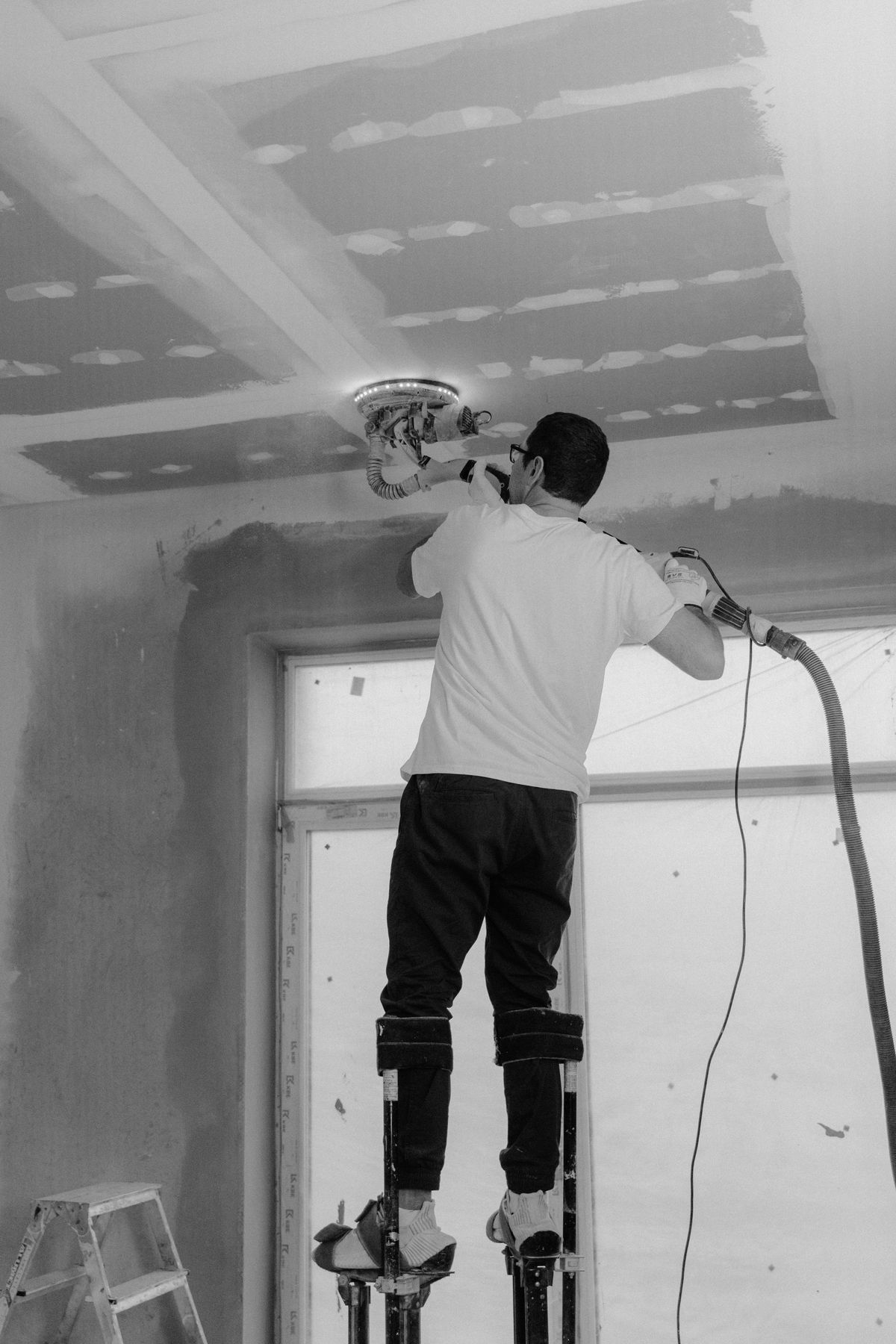
Under every Tucson popcorn ceiling is drywall that was never meant to be seen. Builders sprayed acoustic texture precisely because it let them skip fine finishing — so once the popcorn is scraped away, you're looking at rough joints, gouges, popped fasteners, and decades-old patches. Retexturing is the craft step that turns that raw surface into a ceiling: repairs first, then skim coats of joint compound, sanding, and finally the finish texture (or no texture at all) before primer and paint.
Retexturing isn't only a post-popcorn service, either. Plenty of Tucson homeowners call about ceilings that were skim-coated badly by a previous owner, walls-and-ceilings that don't match after a remodel, or water-repaired patches that stand out like a scar. If your ceiling's surface is the problem, this is the fix.
The Three Finishes Tucson Homeowners Choose
Smooth (Level 5)
Dead-flat, texture-free, and unmistakably modern — the finish you see in new custom builds and high-end Foothills remodels. It makes rooms feel architectural and shows off natural light beautifully.
Trade-offs: the most labor (multiple full skim coats and careful sanding), the highest price, and the least forgiving of framing imperfections — raking Arizona sunlight will reveal any wave in the drywall, so prep has to be excellent.
Knockdown
Joint compound is sprayed or troweled on, then lightly "knocked down" with a wide blade into a low, mottled, organic pattern. It's the most popular choice in Southwest homes — it reads as intentional texture, not leftover popcorn, and pairs naturally with stucco-and-adobe aesthetics.
Trade-offs: hardly any. It's mid-priced, hides minor imperfections well, and is straightforward to patch later. If you're unsure, knockdown is the safe, affordable default.
Orange Peel
A fine, even spatter that looks like — yes — the skin of an orange. It's subtle, uniform, and very common on Tucson walls from the 80s onward, so choosing it for ceilings gives the whole room one consistent surface.
Trade-offs: less fashionable than smooth or knockdown in current remodels, and an uneven spray shows. Best when you're matching existing orange peel elsewhere in the house.
Which Finish Is Right for Your Tucson Home?
- Selling soon? Knockdown delivers the biggest visual upgrade per dollar. Buyers register "updated ceiling," and you keep budget for paint and staging.
- Modern remodel or custom feel? Smooth level 5 is worth the premium — especially in main living areas with big windows and mountain light.
- Matching the rest of the house? If your walls are orange peel, an orange peel ceiling keeps everything coherent; a skilled finisher will blend new texture into existing so transitions disappear.
- Older plaster-era or burnt adobe home? Some Midtown and Sam Hughes-area homes have plaster ceilings or exposed beams that call for a hand-troweled look rather than sprayed texture — this is exactly the kind of judgment call your free walkthrough settles.
- High or vaulted ceilings? Texture choice matters less the farther the ceiling is from your eye; many homeowners choose knockdown for vaults and save smooth for rooms where you can see the surface up close.
Why Tucson's Climate Is Actually a Retexturing Advantage
Joint compound cures by drying, and our desert humidity — often in the single digits and teens — dries skim coats dramatically faster than in most of the country. That means multi-coat smooth finishes that would take a week back East can often be completed in days here. The flip side: fast drying demands an experienced hand, because compound that sets too quickly leaves lap marks for an amateur. It's one more reason ceiling finishing is a specialist's job, not a paint-crew afterthought.
The Retexturing Process, Step by Step
Surface prep and repairs
Leftover texture residue is washed or scraped, fasteners are reset, joints are re-taped where needed, and any damaged drywall is repaired so the new finish has a sound base.
Skim coating
One coat for textured finishes, two to three full coats for smooth. Each coat dries fast in Tucson's air, then gets sanded.
Texture application
Knockdown or orange peel is sprayed to the pattern weight you approved — good pros will shoot a sample patch first so you're choosing from your actual ceiling, not a photo.
Prime and paint
Fresh compound is thirsty and must be primed before its finish coat. Flat ceiling-grade paint evens out sheen and completes the room. More on ceiling painting.
Retexturing FAQs
Can you retexture right over old popcorn?
Not well. Sound practice is popcorn off first (after asbestos testing on older homes), then retexture the bare drywall. The exception is asbestos-positive ceilings, where covering with new drywall — then texturing that — avoids disturbing the material.
How much does retexturing add to a removal project?
Knockdown or orange peel typically adds about $1–$2 per square foot over the scrape; level-5 smooth adds roughly $1–$2 more on top of that. Exact numbers depend on ceiling condition — see the full cost guide or get a free quote.
Can you match my existing wall or ceiling texture for a patch?
Yes — texture matching is one of the most requested skills in ceiling repair. A practiced finisher can feather new knockdown or orange peel into old so a repaired water stain or patched section disappears instead of announcing itself.
How long before we can use the room?
Most single rooms are scraped, retextured, and painted inside 1–2 days thanks to fast desert drying. Whole homes generally run 3–5 days, worked in zones so you're never displaced from the entire house at once.
See a Sample on Your Own Ceiling
Get a free quote with finish options priced side by side — smooth, knockdown, and orange peel — from a licensed, insured Tucson ceiling professional.